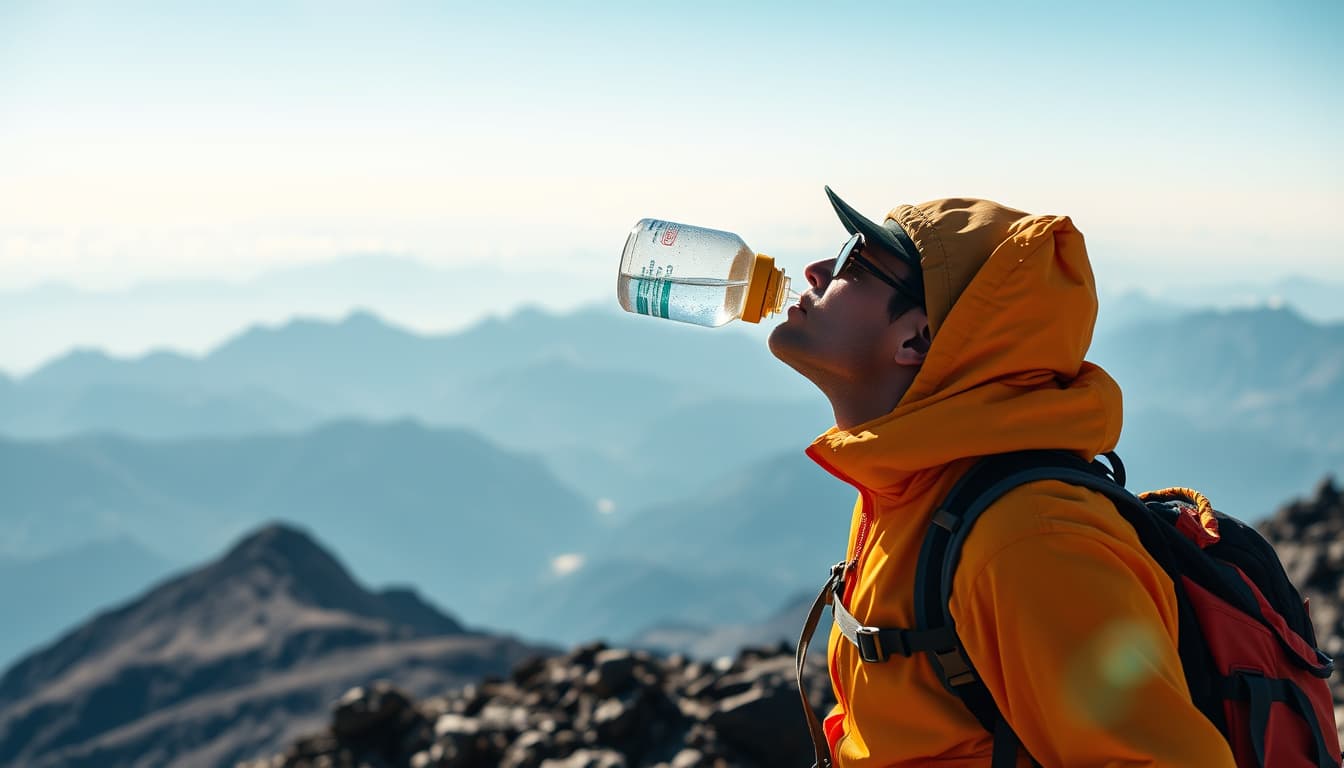
Staying hydrated on Kilimanjaro is simple in principle: drink regularly, carry enough treated water for the day, and tell your guide if you feel unwell. In practice, altitude, cold air, long hiking days, and a frozen hydration tube can make that harder than it sounds.
Peak Planet provides treated drinking water throughout the climb and fills your reusable containers at camp. Your job is to bring enough carrying capacity, drink steadily, and follow your guide’s instructions instead of forcing yourself to hit a rigid number.
Most Peak Planet climbers use 4–5 liters of total fluid per day as a planning target, with at least 3–4 liters of carrying capacity for the trail. Your actual needs vary with the day’s route, temperature, exertion, body size, sweat rate, food intake, medication, and health. More is not always better: drinking far beyond your needs can dangerously dilute the sodium in your blood.
Quick answer: Bring reusable containers that hold 3–4 liters, start each hiking day with them filled, sip regularly, and drink additional fluids with meals and at camp. Use a hydration bladder for convenience and a wide-mouth bottle as backup—especially on summit night, when bladder tubes can freeze.

Why Hydration Matters at High Altitude
Kilimanjaro rises to 5,895 meters (19,341 feet). As you climb, you breathe faster to compensate for lower oxygen levels. The air also becomes colder and drier, so every breath releases moisture you may not notice losing.
You also lose fluid through sweat and urine. Long hiking days, sun exposure, dry air, illness, vomiting, or diarrhea can increase those losses. Acetazolamide, commonly known as Diamox, can increase urination as part of its normal effect.
Adequate hydration supports normal circulation, temperature control, digestion, and physical performance. Dehydration can cause or contribute to:
- Thirst and dry mouth
- Darker urine or reduced urine output
- Fatigue and weakness
- Headache
- Dizziness or lightheadedness
- Nausea
- Faster heart rate
- Reduced concentration or coordination
These symptoms overlap with acute mountain sickness and other medical problems. Do not assume a headache or nausea is “only dehydration.” Tell your guide about symptoms promptly so the team can evaluate the complete picture.
Hydration is not a cure for altitude illness and does not replace gradual ascent. Longer itineraries with better acclimatization profiles remain one of the most important planning decisions. Learn more about Kilimanjaro altitude sickness and Peak Planet’s safety approach.
How Much Water Should You Drink on Kilimanjaro?
Peak Planet generally recommends planning for 4–5 liters of fluid across the full day. That total can include water consumed while hiking as well as water, soup, tea, and other drinks at camp.
This is a practical mountain target, not a command to force down a fixed amount regardless of how you feel. There is no single intake schedule that fits every climber or every day. The Wilderness Medical Society warns that overdrinking during prolonged exertion can cause exercise-associated hyponatremia—a dangerous drop in blood sodium.
Use three guides together:
- Your guide’s instructions. The route, weather, and day’s workload matter.
- Regular drinking opportunities. Sip during the hike and drink at breaks and meals.
- Your body’s signals. Thirst, urine pattern, stomach comfort, and symptoms all provide useful context.
Your urine will often be somewhat darker first thing in the morning. During the day, pale yellow urine generally suggests reasonable hydration, while persistently dark urine or very low output can indicate that you need attention. Completely clear urine all day is not a goal and can accompany excessive intake.
If you have kidney, heart, or endocrine disease—or take medication that affects fluid or electrolyte balance—ask your doctor for individualized high-altitude guidance before the trip.
A Practical Daily Hydration Routine
You do not need to drink on an aggressive hourly schedule. Build steady, manageable habits instead.
Before Hiking
- Drink with breakfast.
- Fill every bottle and hydration reservoir at camp.
- Confirm how much water you are expected to carry for that day.
- Keep one container accessible rather than burying everything in your daypack.
On the Trail
- Take small, regular sips instead of waiting until a break to drink a large amount.
- Drink when thirsty and at natural breaks.
- Increase your attention to hydration during warm, exposed, or unusually strenuous sections.
- Let your guide know if you are unable to drink, repeatedly vomiting, or producing very little urine.
At Camp
- Continue drinking with snacks and meals.
- Count soup and other beverages toward your daily fluid intake.
- Refill only with the treated water supplied by the crew.
- Avoid “catching up” by rapidly drinking several liters before bed.
On Summit Night
- Begin the summit push reasonably hydrated from the previous day.
- Carry insulated, wide-mouth bottles even if you normally prefer a bladder.
- Sip manageable amounts; do not force large volumes into a cold or nauseated stomach.
- Keep bottles upside down so ice tends to form away from the cap.
- Store bottles inside your pack, wrapped in spare clothing, with the lid fully tightened.
Editor’s note: a short video showing how Peak Planet climbers hydrate on Kilimanjaro, with captions and transcript, will be added here.
Where Does Drinking Water on Kilimanjaro Come From?
Peak Planet supplies water throughout the trek. The mountain crew collects water from approved local sources where it is available and treats it before it is served to climbers.
At lower elevations, collected water is boiled and filtered. As water availability and camp logistics change higher on the mountain, the crew uses appropriate purification methods to keep supplying potable water. Climbers do not need to bring a personal filter, pump, or purification tablets for a standard Peak Planet itinerary.
Each morning, the crew fills the reusable containers you will carry during the hike. You may not be able to refill while walking between camps, which is why adequate carrying capacity matters. Once you reach camp, treated water and hot drinks are available again.
Peak Planet also provides hot water for washing and handwashing at camp. For more details about meals and drinks, see what climbers eat on Kilimanjaro and what is included in a Peak Planet climb.
Important: Do not drink directly from mountain streams, taps, or other untreated sources. Use only the water supplied by the Peak Planet crew.
Editor’s note: photo of the Peak Planet crew treating drinking water at camp to be added.
The Best Water-Carrying Setup for Kilimanjaro
Bring 3–4 liters of total reusable capacity and use more than one container. A good setup is:
- One 2- or 3-liter hydration bladder
- One or two 1-liter wide-mouth bottles
- Insulated bottle sleeves for summit night
Check the current Kilimanjaro packing list before purchasing gear.
Hydration Bladder: Convenient During Normal Hiking Days
A bladder lets you drink without stopping or removing your pack. That convenience makes regular sipping easier.
Use the bladder for plain water. Sugary drink mixes leave residue in the reservoir and tube, making both harder to clean during a multi-day trek.
Wide-Mouth Bottle: Essential Backup
A reusable bottle is easier to fill, inspect, and clean. It also works better than a hydration tube in freezing conditions.
Do not make a bladder your only water container. A tube can leak, a bite valve can fail, and the hose can freeze near the summit.
Single-Use Bottles
Plan to use durable, reusable containers. Single-use plastic water bottles are not permitted on Mount Kilimanjaro, and they are poorly suited to the cold and repeated handling of a multi-day trek.
How to Keep Water From Freezing on Summit Night
Freezing hydration systems are one of the most common—and preventable—Kilimanjaro water problems.
Even an insulated bladder hose can freeze. For summit night:
- Carry at least one wide-mouth bottle.
- Fill bottles with warm, not boiling, water if the crew advises it.
- Place each bottle in an insulated sleeve or clean sock.
- Carry bottles upside down inside your pack.
- Wrap them in spare clothing for extra insulation.
- Sip regularly so water does not sit motionless in the mouthpiece or hose.
- After drinking from a bladder, blow the water back out of the tube and into the reservoir.
Keep bottle lids clean and make sure they are properly threaded before putting them in your pack. A leaking bottle can soak insulating layers when you need them most.

Should You Use Electrolytes on Kilimanjaro?
Electrolyte or flavored drink mixes can be useful, especially if they make it easier for you to drink, replace some sodium lost through sweat, or provide carbohydrates during a long day. Bring products you have already tested during training.
Use them thoughtfully:
- Follow the product’s mixing instructions.
- Put drink mix in a bottle, not your hydration bladder.
- Keep some of your supply as plain water.
- Do not treat electrolytes as permission to overdrink.
- Avoid concentrated mixtures that upset your stomach.
Electrolytes do not prevent hyponatremia if you continue drinking far more fluid than your body can clear. Food, soup, and snacks also contribute sodium and other electrolytes throughout the day.
Avoid experimenting with unfamiliar high-caffeine energy powders on the mountain. Moderate tea or coffee intake does not automatically dehydrate a regular caffeine user, but excessive caffeine can disrupt sleep, worsen stomach symptoms, or make it harder to judge how you feel.
Alcohol is not appropriate during the climb. It impairs judgment and sleep and can complicate the assessment of altitude-related symptoms.
Dehydration, Overhydration, or Altitude Sickness?
These conditions can share symptoms, and climbers should not try to diagnose themselves from a checklist.
|
Possible concern |
Signs that may occur |
|---|---|
|
Dehydration |
Thirst, dry mouth, reduced or dark urine, weakness, dizziness, or headache |
|
Overhydration or low sodium |
Bloating, nausea, headache, unusual fatigue, confusion, or worsening symptoms despite heavy fluid intake |
|
Acute mountain sickness |
Headache after gaining altitude, often with nausea, dizziness, fatigue, or poor sleep |
|
Serious altitude illness |
Confusion, loss of coordination, shortness of breath at rest, marked weakness, or rapidly worsening symptoms |
The overlap is the point: a headache is not an instruction to automatically drink a large volume of water. Report symptoms to your guide immediately. Peak Planet guides conduct health checks, watch trends, and determine the appropriate response, which may include rest, further assessment, oxygen, or descent.
Never hide symptoms because you are worried they will affect your summit attempt. Early reporting gives the team more options.
How to Practice Hydration Before the Climb
Training is the right time to test your system—not to force your body to drink extreme quantities.
During longer training hikes:
- Carry the bladder and bottles you plan to use on Kilimanjaro.
- Learn where the hose and bottle sit comfortably on your pack.
- Test electrolyte flavors and concentrations.
- Notice how weather, pace, and clothing affect your thirst and sweat rate.
- Practice drinking regularly without exceeding what feels comfortable.
- Check that your pack remains balanced when carrying 3–4 kilograms of water.
Do not follow the old advice to train yourself to drink 1–1.5 liters every hour. Fluid needs differ widely, and a fixed high intake can be unsafe. Your goal is to build a reliable routine and identify what works for your body.
For broader preparation, use Peak Planet’s Kilimanjaro training guide and compare Kilimanjaro routes with enough days for a gradual ascent.
A Simple Plan for Staying Hydrated
Before your climb, bring 3–4 liters of reusable carrying capacity and test the system during training. On the mountain, begin each day with your containers filled, drink regularly, use camp meals and drinks to support your intake, and prepare an insulated bottle for summit night.
Most importantly, communicate. Tell your guide how much you have consumed and report headaches, nausea, dizziness, unusual fatigue, or changes in urination. Good hydration is part of safe climbing—but it works alongside gradual acclimatization, proper nutrition, appropriate pacing, and experienced medical oversight.
If you are planning your climb, review Peak Planet’s group climb dates and prices or contact the Peak Planet team for help choosing an itinerary.