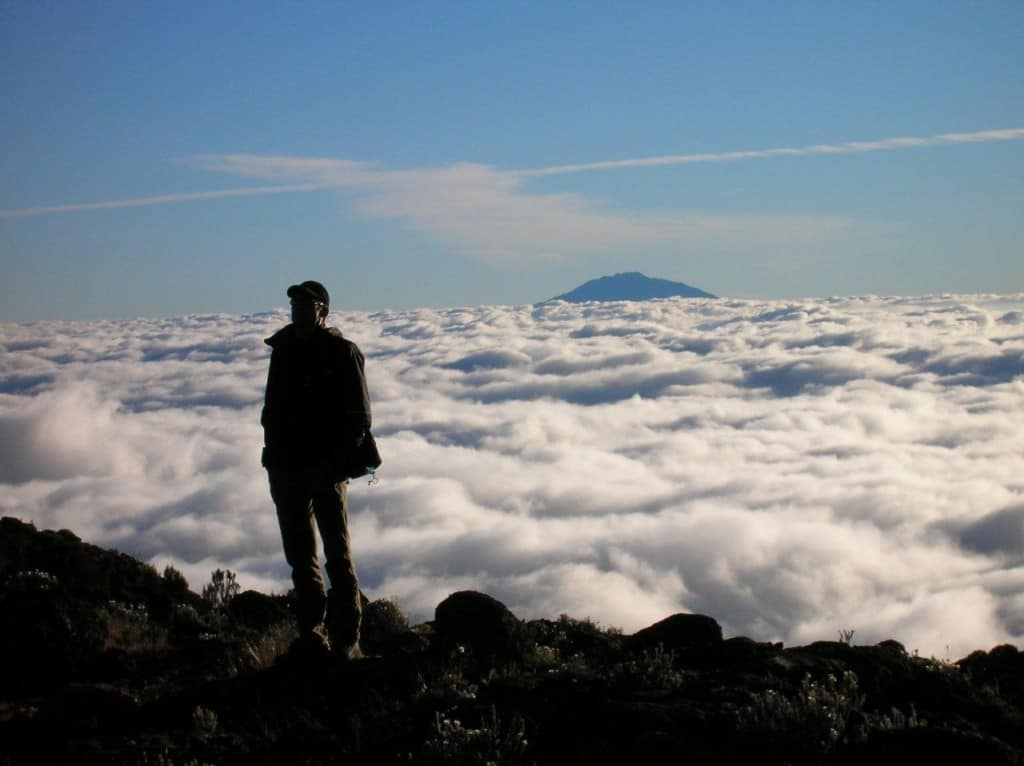
When you’re preparing for a mountain climb, a lot of things may cross your mind, such as what gear to buy, what clothes to wear, and what workouts to do. These are all important, as having the right equipment and being in good shape are both essential aspects of mountain climbing and backpacking that shouldn’t be ignored. There is, however, another major thing to keep in mind – altitude.

While some routes up Kilimanjaro are inherently more difficult than others almost all of them would be considered mere hiking trails if they were located at lower altitudes, or if the altitude didn’t change so much over the course of the trip. In fact, one of the reasons so many visitors, completely untrained in trekking can successfully climb the world’s tallest free-standing mountain is that the trails themselves are not that difficult. You may have seen pictures taken by those who’ve previously made the climb and be thinking, “That doesn’t look so tough.” This is the perfect time for a practical application of the old adage, ‘looks can be deceiving.’
In order to understand why altitude is such a big deal, it helps to know exactly what it does to your body. The short answer is that the higher you go, the less oxygen there is available. But that doesn’t tell you what happens when your body doesn’t get the oxygen it needs. To avoid turning this into a complicated lecture on oxygen levels and human biology, we’ll just go over the basics. When your body notices that it’s getting less oxygen than it’s used to, it makes you breathe deeper and faster. Changes in your breathing rate are normal, as it’s the body’s way of regulating oxygen. Other common effects of altitude adjustment include the heart beating faster and a change in priorities – your body will re-route its energy toward more important functions, sort of like when you’re sleeping.

So, how does this make climbing Kilimanjaro harder? For starters, problems arise when your respiration rate - how quickly your body processes the air you’ve breathed in - doesn’t increase with your breathing. Then there’s altitude sickness, which is commonly referred to as acute mountain sickness (AMS). It presents itself differently in people – some people have flu-like symptoms while others feel like they are suffering from a bad hangover. It’s impossible to tell if you’ll be susceptible to AMS before you are exposed to altitude. However, there is one great way to prepare for altitude in your own home through the use of an altitude training system.
Altitude training involves the exposure to an oxygen reduced environment and it is scientifically proven to reducing the symptoms of altitude sickness. Hypoxico is the world’s leading manufacturer of altitude training equipment. Their systems can simulate altitudes of up to 21,000ft/6,400m, so you can pre-acclimatize before you ever step foot on Kilimanjaro. This greatly increases the success and safety of your climb by virtually eliminating the chance of you succumbing to altitude sickness. And best of all, Peak Planet customers receive a 15% discount for Hypoxico altitude training system rentals. (For more information, please visit Hypoxico’s altitude training system rental page and email or call Brian Oestrike at 212-972-1009 x113. Brian is an experienced mountaineer and expert on the Hypoxico systems.)

The real threats of altitude lie in two rare conditions - high altitude pulmonary edema (HAPE) and high altitude cerebral edema (HACE). What you need to know about these conditions is that they can be fatal. If you can’t catch your breath while resting, have blue lips, have a wet cough, or can’t seem to think or walk normally, you may be showing signs of either HACE or HAPE and you should notify your guide immediately. While determination is an admirable trait that is certainly necessary to reach the summit, you need to recognize the difference between the willingness to push on and ignoring potentially deadly symptoms. Your safety is paramount and is always the first priority.
Pole, pole – slowly, slowly. You’ll hear this often on Mount Kilimanjaro, and you’d do well to take it to heart. Altitude sickness takes down marathon runners and strong, fit men in their prime. Tennis legend Martina Navratilova failed to summit. So did NFL MVP Ray Lewis. Do not underestimate the mountain.
The best way to avoid AMS in any of its forms is to spend time adjusting to each level of altitude as you go, and it’s the primary reason that climbing Kilimanjaro takes so long. In the first few days, your group may be going very slow – so slow that you start to mentally berate the guides. “This is ridiculous! We’re all in good shape and the terrain is mostly flat, so why are we going at a snail’s pace?” By the end of the climb you realize that the pace they set is from years of experience knowing what is best for the group’s success.
Always keep in mind that thousands of people have climbed Kilimanjaro before you, and they’ve all faced the challenges that altitude has to offer. Many were successful, and you can learn from their achievements. Many didn’t make it, and you can also learn from their failures. When you’re standing at Uhuru Peak, the summit of 19,341 feet above sea-level, you’ll be glad for those baby steps the guides made you take from day one, and you’ll be living proof that altitude is an opponent that can be overcome.

For more information on altitude acclimatization, visit here.